
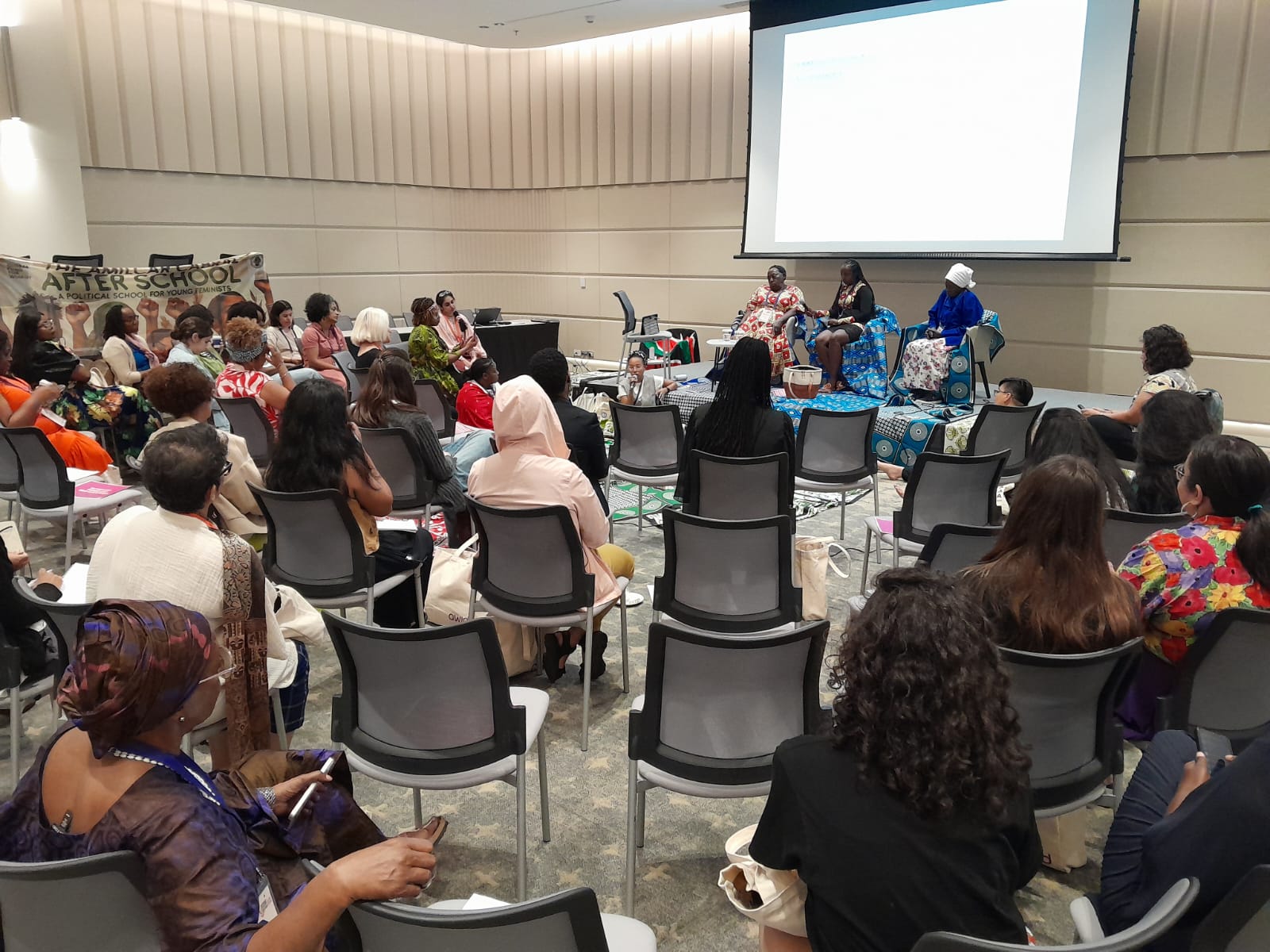
In a world where land, voice, and dignity have been systematically stripped from those who nurtured generations, the Hadithi za Shamba circle emerged as a radical act of reclamation. For the first time in their lives, a group of elderly women—custodians of histories, knowledge, and resistance—boarded a plane to the 14th AWID Forum in Bangkok. This was more than a journey across borders; it was a crossing of time, a reckoning with past injustices, and an assertion of their right to be seen, heard, and honored.
At AWID, these women stood before a global feminist audience and broke decades of silence. They spoke of the postcolonial violence that has shaped their lives—from land dispossession to the deep scars of state and patriarchal brutality. They bore witness to the forced evictions in Kariobangi, where modern-day capitalism continues the colonial project of displacement, stripping them of the land they have tilled, the homes they have built, and the communities they have nurtured. They told their stories not as victims, but as survivors, as architects of resistance, and as voices that refuse to be erased.
Hadithi za Shamba is not just a storytelling space; it is an act of feminist insurgency. It is a space where women whose labor has fed nations and whose wisdom has held communities together reclaim their narratives from the margins. The trip to Bangkok was transformative—not just for them, but for all who witnessed their power. It was a moment of global sisterhood, a meeting of movements, and a testament to the necessity of centering intergenerational feminist activism in our collective struggle for justice.
This experience underscores an urgent call to funders and allies: supporting feminist movements means sustaining these spaces of memory, truth-telling, and resistance. It means recognizing that justice for elderly women is justice for all women. It means committing to long-term partnerships that do not tokenize, but rather uplift and amplify the voices of those who have been systematically silenced.
The Hadithi za Shamba circle has proven that the fight for land, dignity, and justice is far from over. These women are not at the twilight of their activism; they are at the forefront of a movement demanding a radical reimagining of justice, land rights, and feminist solidarity. The question now is: who will stand with them?